
The Session
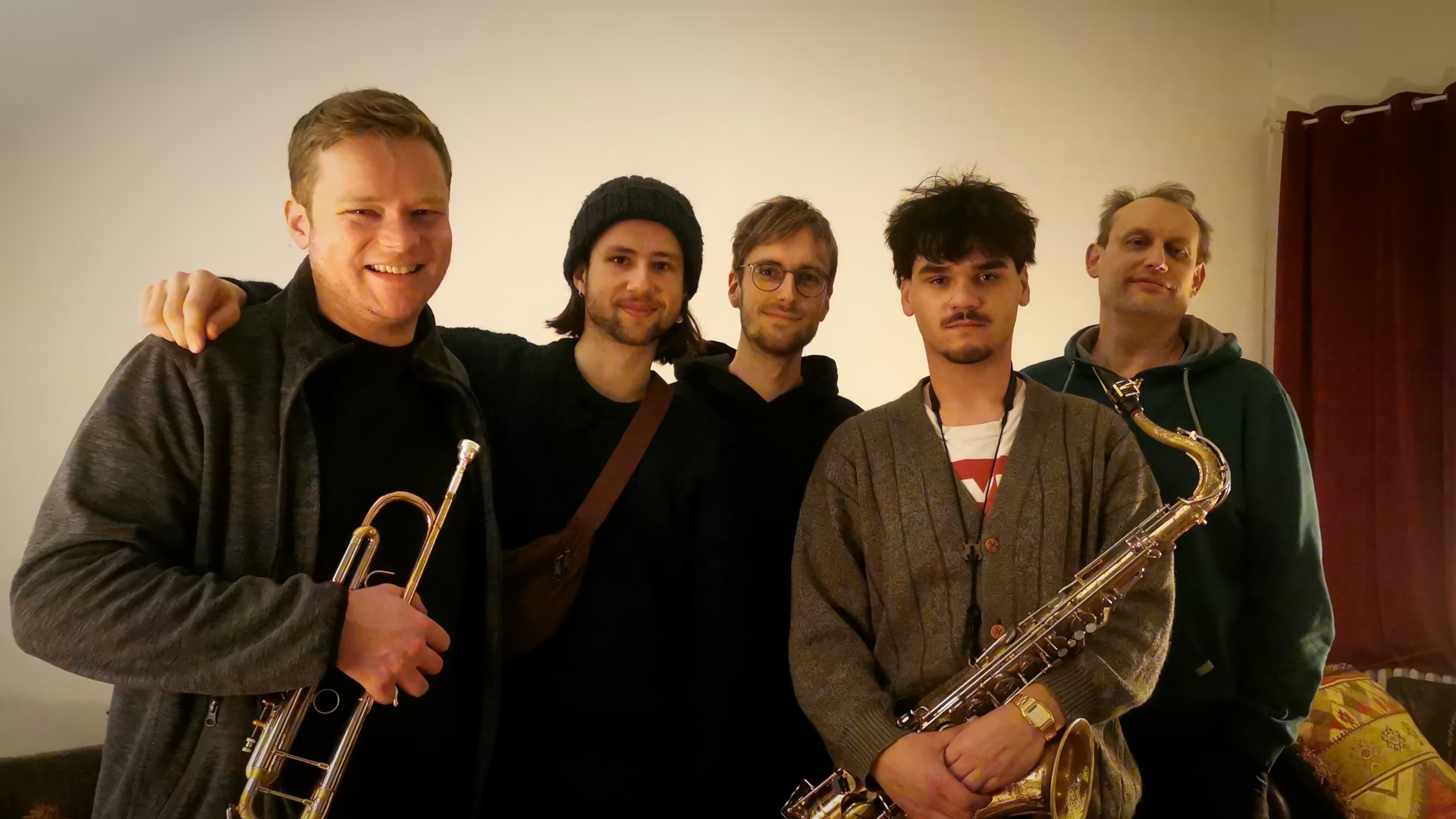
Over four days at our Berlin jazz recording studio, the ensemble recorded seven pieces, including six original compositions by Matej and a beautifully understated interpretation of John Coltrane's Naima. Rooted in European jazz, contemporary improvisation and fusion, Matej's writing balances sophisticated rhythmic ideas with lyrical melodies and open improvisational spaces, demanding both precision and spontaneity from every player.
Recorded Repertoire
For Jim (From Jim To Home) · Alina · Days or Nights · Sweet April · Kurt's Blues (Distance And Proximity) · Sudden Freedom · Naima. With the exception of Naima, all compositions were written by Matej Korbelič.
Designing the Recording Space
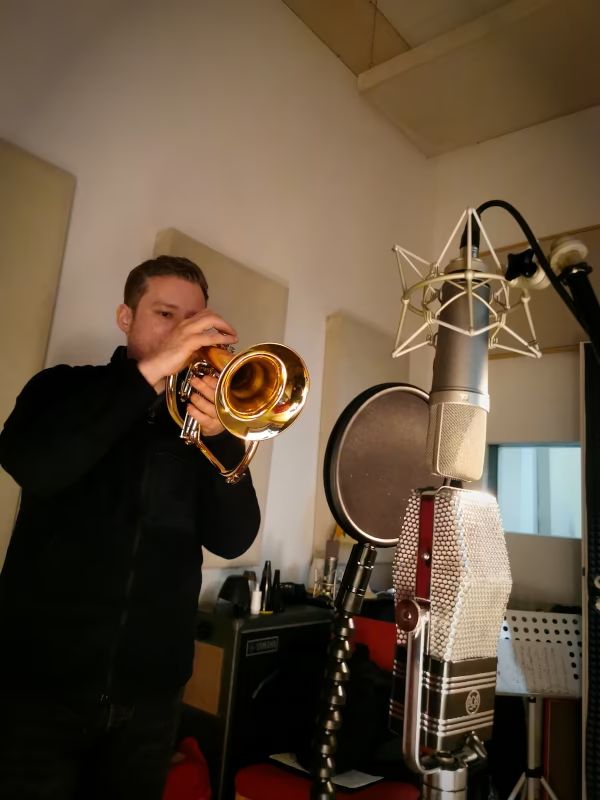
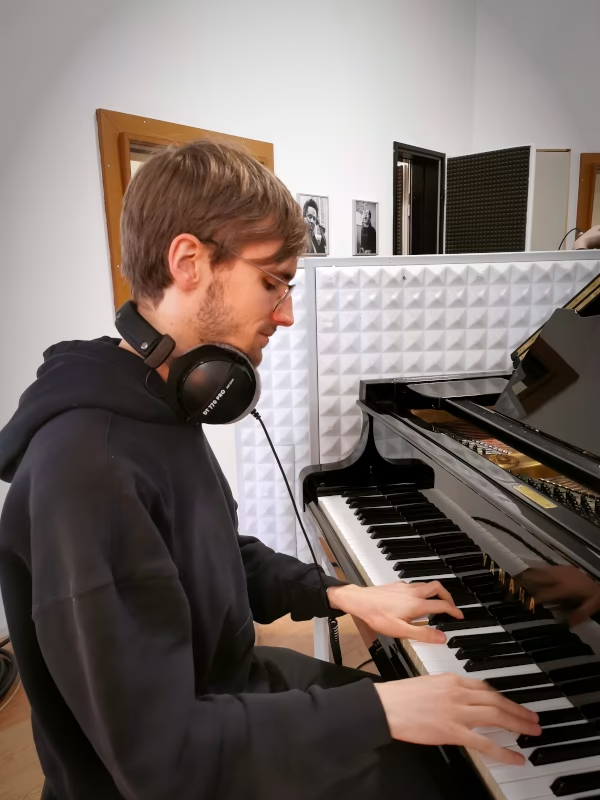
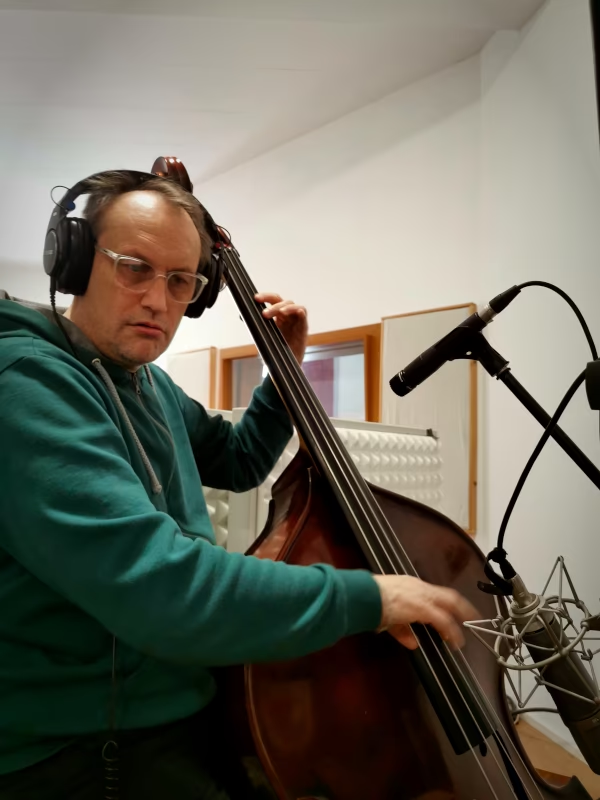
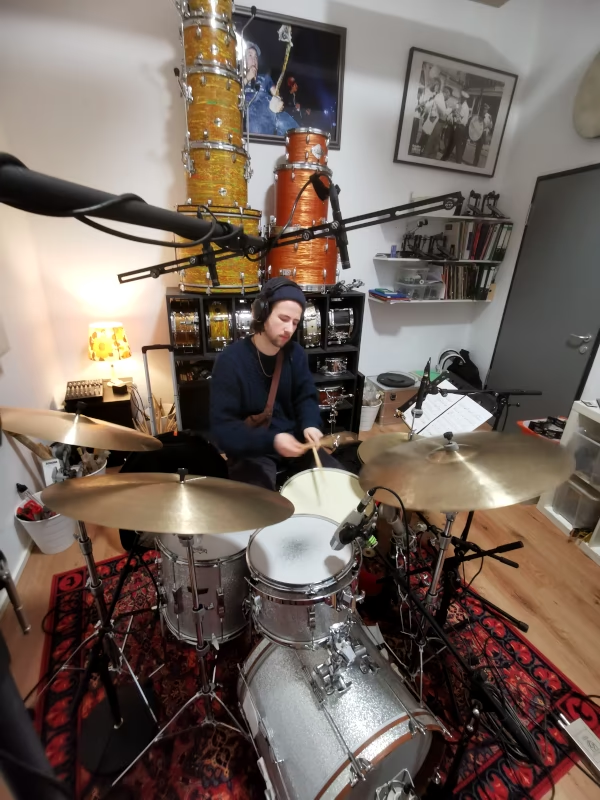
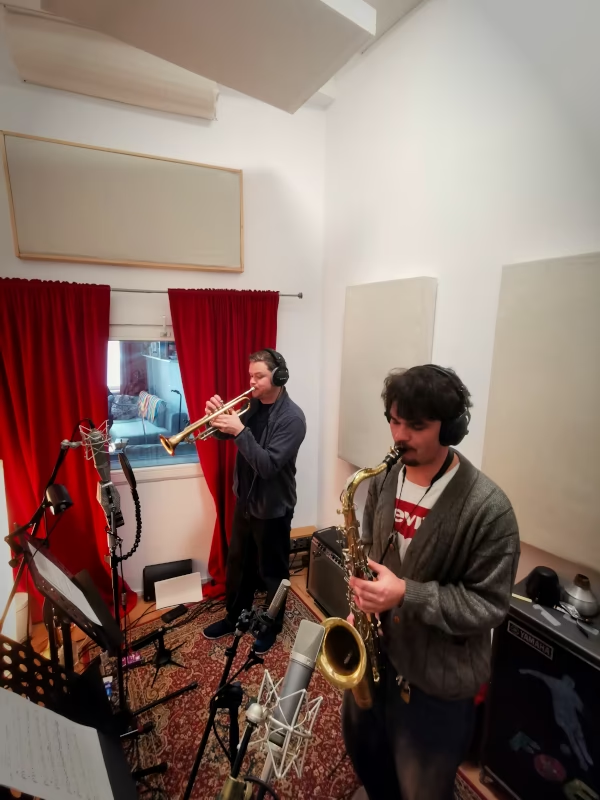
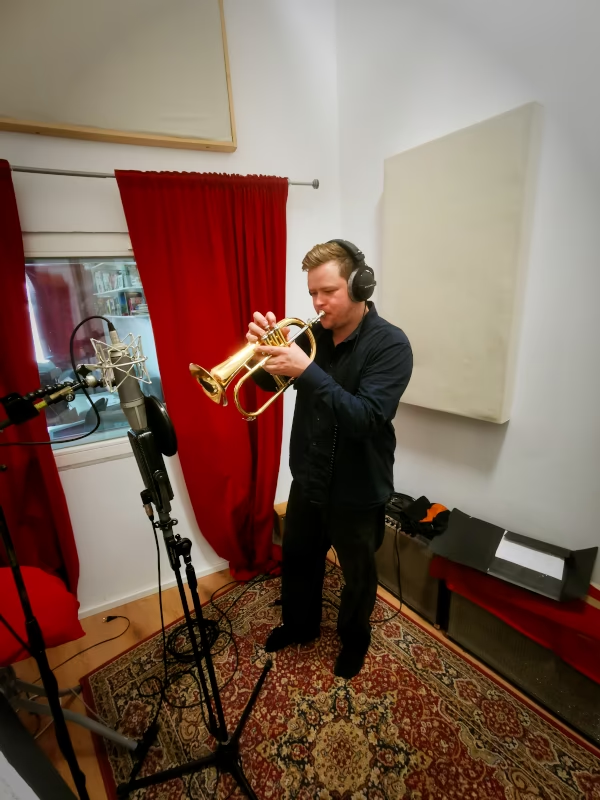
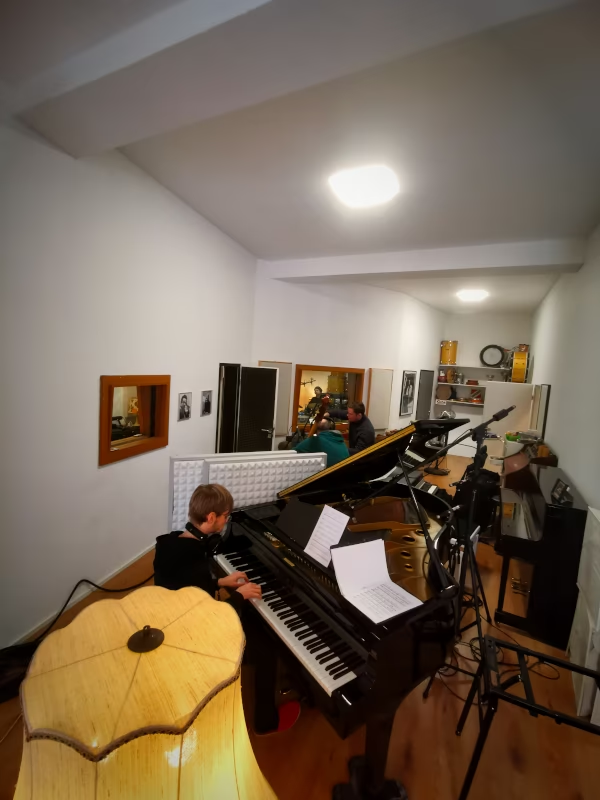
Every recording session begins by asking a simple question: What setup will best serve the music? For this project we chose a different room layout than we often use for live jazz recording. Rather than placing the trumpet in the main room, both brass players shared our isolation room. Keeping Matej's trumpet or flugelhorn together with Anton Shatylo's tenor saxophone created a tighter, more intimate brass sound while still allowing complete visual contact with the rhythm section. The slight acoustic coupling between trumpet and tenor sax produced a cohesive brass sound that would have been difficult to recreate with complete isolation. Elias Störr performed on our Yamaha G5 grand piano in the main room, with Tom Götze positioned beside the piano behind a series of gobos. This provided excellent sightlines between Tom and drummer Heinrich Eißmann while keeping bleed between piano and double bass to an absolute minimum. Heinrich occupied the drum room, completing a setup that gave every musician direct visual communication while allowing enough isolation to retain complete flexibility during mixing.
Finding the Right Sound
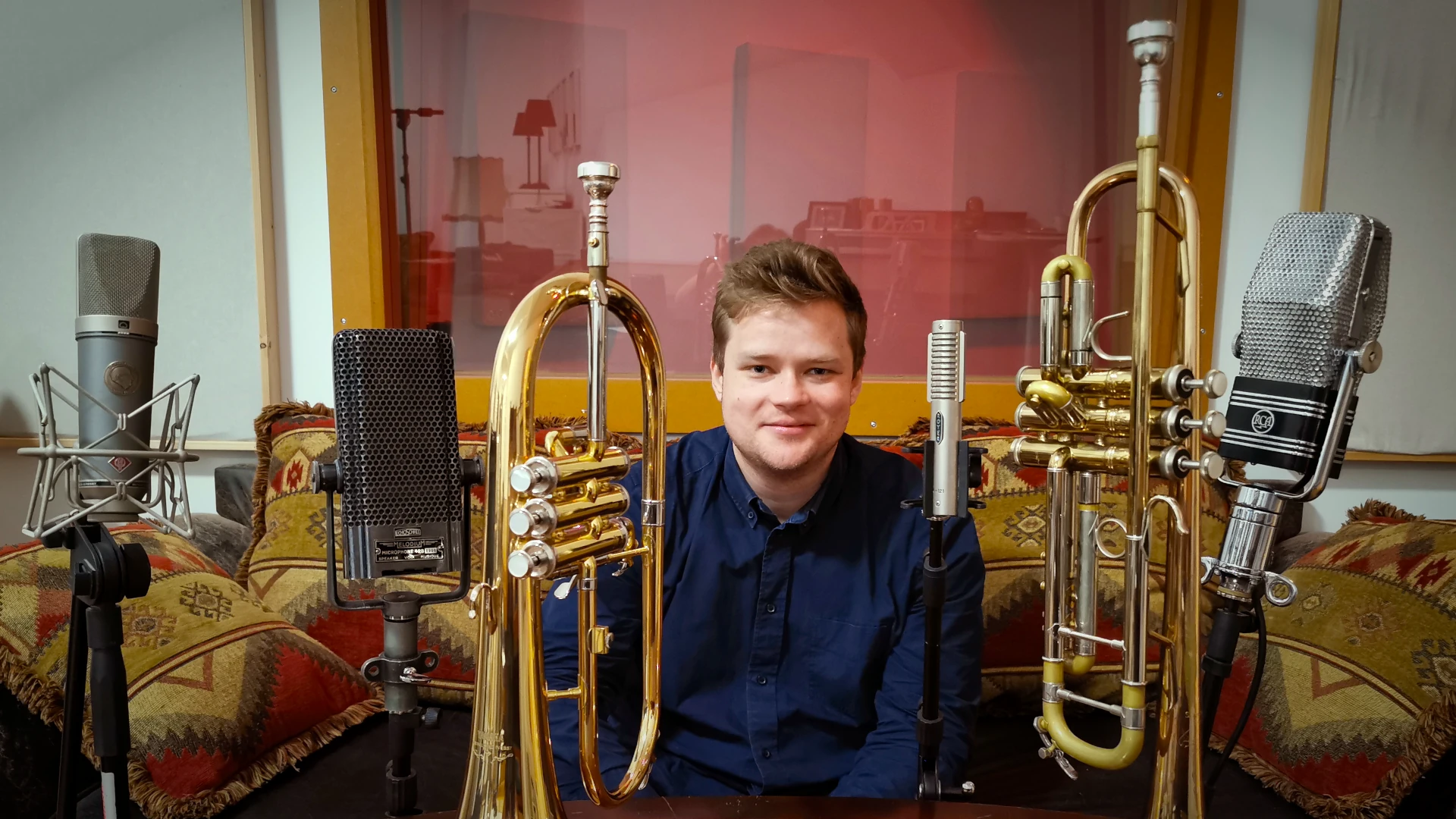
The microphone choices reflected the character of each instrument rather than following a fixed template. For Matej's trumpet we blended the focused warmth of a Royer R-121 ribbon with the definition and detail of a Neumann TLM 67. On flugelhorn we paired the TLM 67 with either an RCA 44 or a vintage Melodium ribbon, depending on the character of each composition, producing a darker, more rounded sound that perfectly complemented the instrument. Anton Shatylo's tenor saxophone was captured using a Groove Tubes Velo-8 ribbon together with another Neumann TLM 67, giving the recordings warmth, clarity and excellent transient response while preserving the instrument's natural dynamics. The Yamaha G5 grand piano was recorded using a pair of Gefell small-diaphragm condensers positioned over the hammers, complemented by a pair of ribbon microphones acting as a tail pair to capture the instrument's depth and resonance. Tom Götze's double bass was recorded using a Neumann TLM 67 on the body together with a Shure SM57 positioned towards the fingerboard to capture articulation and finger attack. The combination delivered a full, natural bass sound that remained defined even during the most rhythmically demanding passages. For the drums, Heinrich's kit was captured with a spaced pair of Beyerdynamic MC930 small-diaphragm condensers as overheads, Sennheiser MD421s on the toms, an Audix i5 on the snare, a Beyerdynamic M260 on hi-hat, a Lauten Audio Clarion FET on the resonant bass drum head and a Lauten Audio Horizon on the beater side. The ambience of the drum room was completed with a Blumlein pair of Superlux ribbon microphones, providing a natural stereo image that tied the entire kit together.
Four Days of Live Performance
Unlike a single-day jazz session where efficiency is everything, the four-day schedule gave the band room to explore different approaches, refine arrangements and revisit pieces without feeling rushed. That extra time allowed the musicians to focus entirely on performance while we concentrated on capturing every nuance with as little technical interruption as possible. The recordings were produced using our hybrid recording workflow, combining carefully selected microphones, high-end analogue signal paths and modern digital editing to preserve the immediacy of the performances while offering complete flexibility during post-production.
The Result
The result is a recording that reflects Matej's compositional voice: rhythmically adventurous, harmonically rich and full of spontaneous musical conversation. Rather than polishing away the human element, the production preserves the subtle interactions that only happen when exceptional musicians share the same performance. This is exactly the kind of project we love at Hot Milk Studio: helping artists transform outstanding performances into timeless recordings. Whether recording a straight-ahead jazz quartet or contemporary European jazz with complex rhythmic interplay, our goal is always the same: to create an environment where musicians can perform naturally while every nuance is captured with clarity, depth and musicality.