
Before the Session
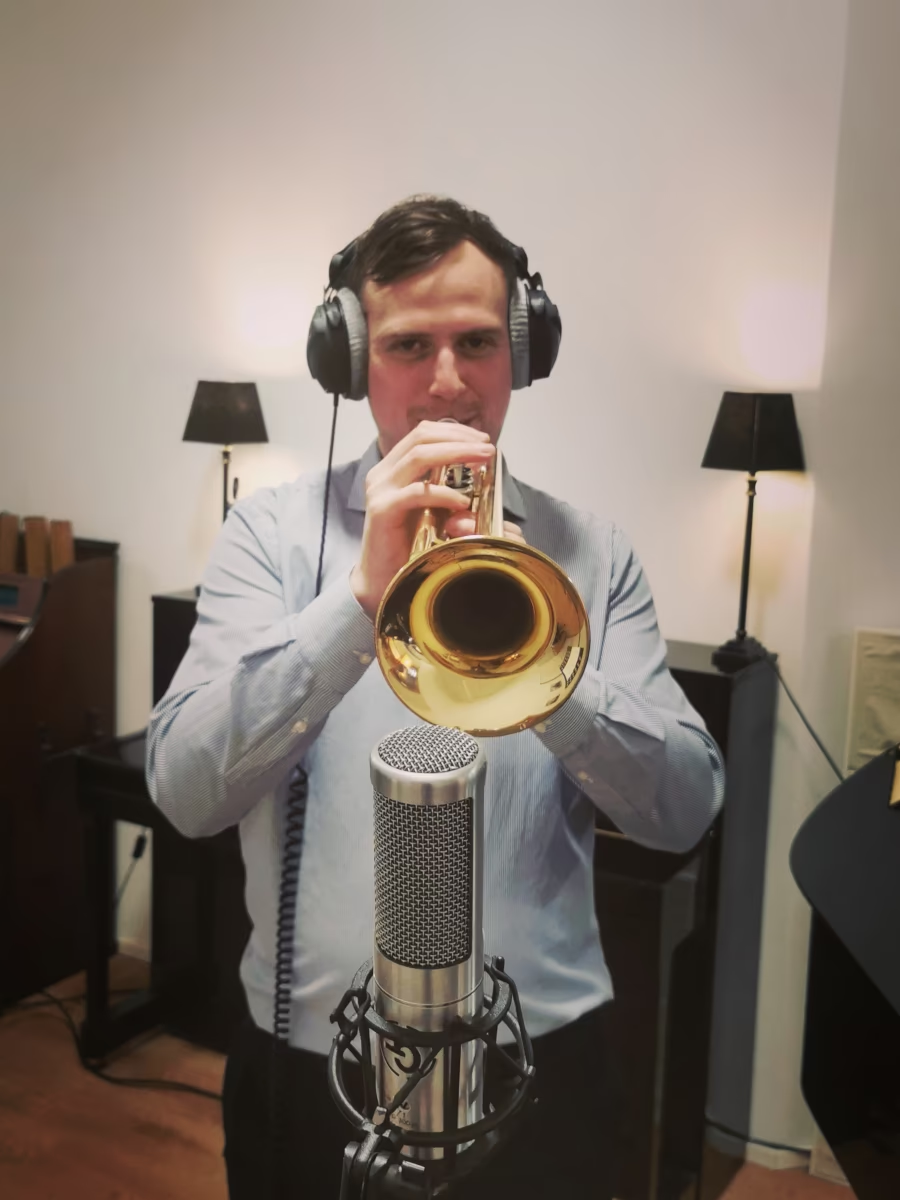
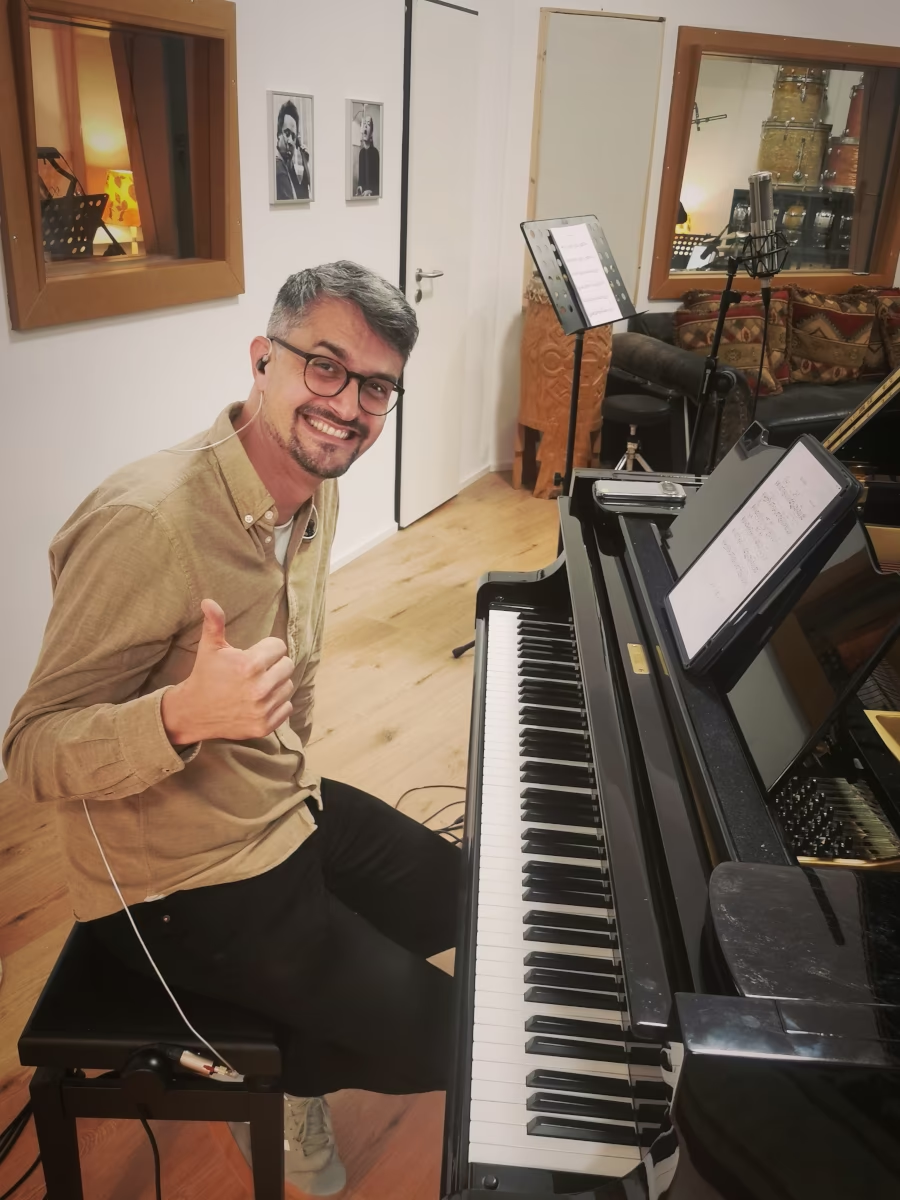
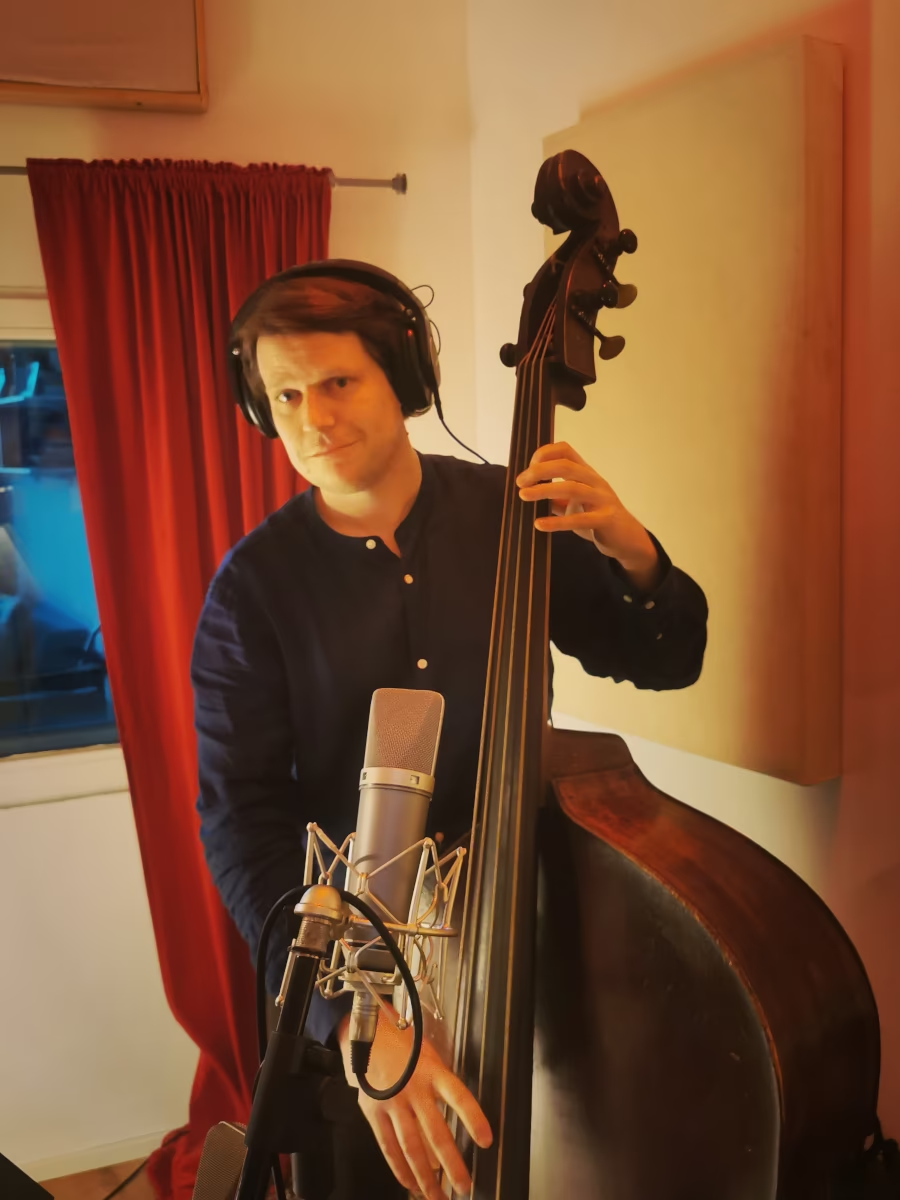
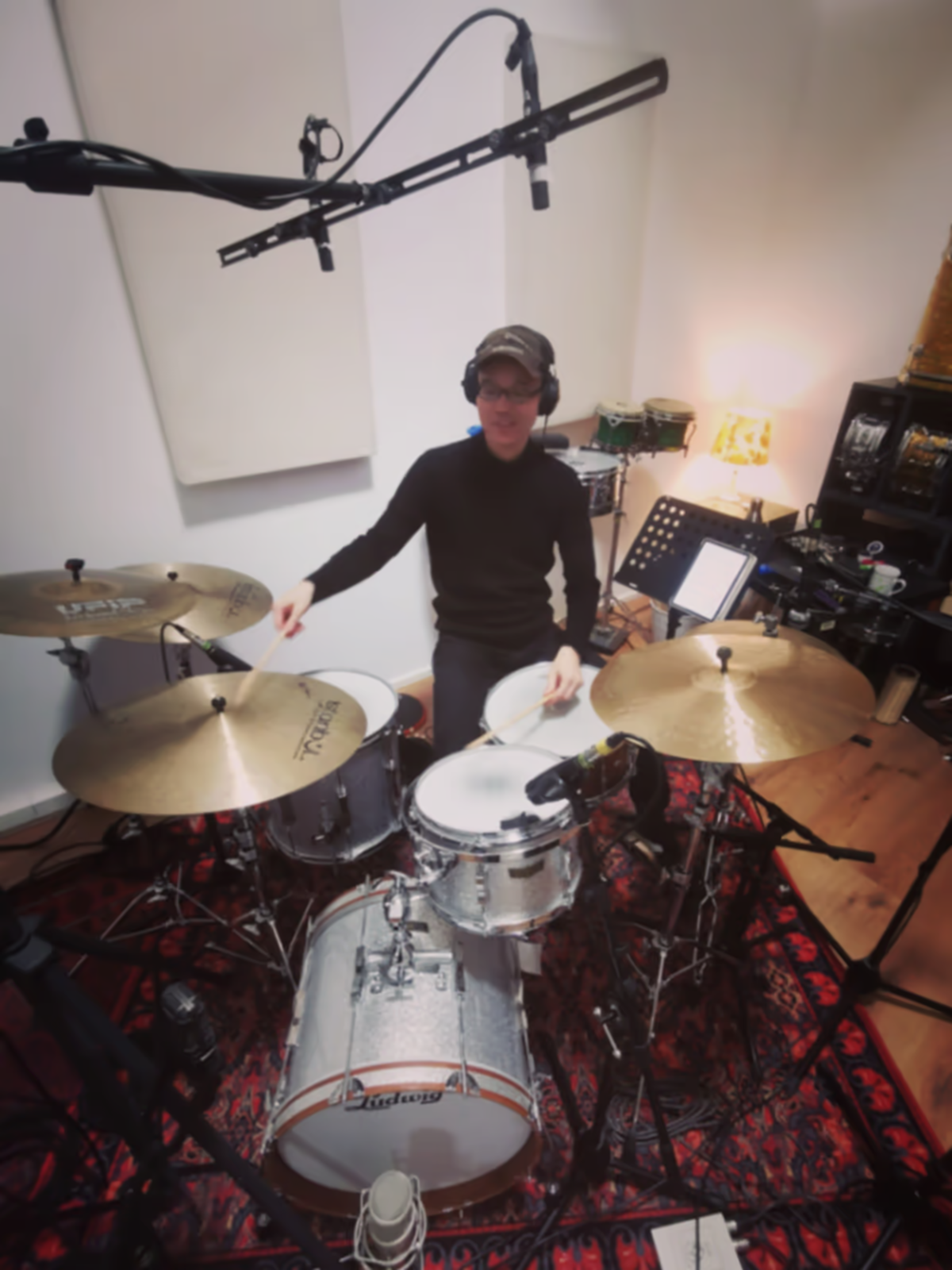
We started by talking through instrumentation: Matthew on trumpet and flugelhorn, Felix Mross on grand piano and Fender Rhodes, Ben Lehmann on double bass and electric bass, Shinichi Nakajima on a four-piece jazz kit. Ben asked to use our Fender Jazz bass, and Shinichi wanted to play the Ludwig Club Date kit with a wood snare, tuned high in classic bebop style. We also talked with Matthew about how many songs are realistically feasible in a day. In our experience, a well-rehearsed jazz group can get through two to ten songs in a session, depending on how complex the material is — and we always favor quality over quantity, walking clients through the trade-off between fitting in more songs and the drop in performance quality once concentration starts to fade. Matthew agreed, and his band came in well prepared to record six songs.
Bringing in Video
Matthew also asked if we could recommend a videographer — he wanted two of the songs filmed as a music video, plus some behind-the-scenes footage. We put him in touch with Isabelle Schmitz, a trusted collaborator we've worked with on many sessions here. Isabelle knows the room well and has a good eye for camera positions that get the best sightlines without getting in the way of the session.
Mic'ing the Band
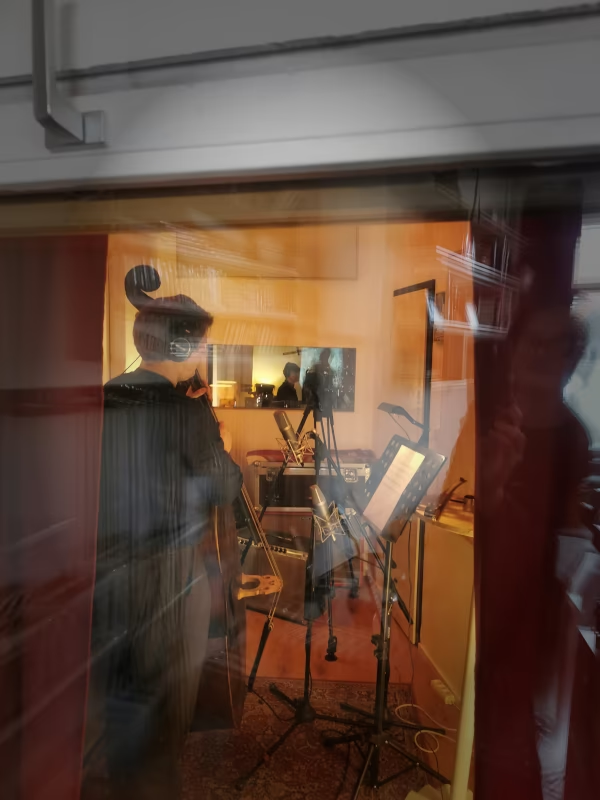
The setup followed the music: piano and trumpet sharing the main room, with the piano lid angled up as an acoustic screen against trumpet spill; bass in the isolation room; drums in the drum room. Piano and trumpet: the piano was picked up with an ORTF pair of Gefell small-diaphragm condensers over the hammers, paired with a set of ribbons positioned as a quasi Decca tail pair. The trumpet was captured on a vintage ribbon mic, its null axis aimed at the piano to keep spill down. The spill that did make it onto the piano mics turned out to work in the recording's favor — a warm ambience that suited the brass nicely. Double bass: a pair of classic Neumann large-diaphragm condensers — one on the body, one at the neck. Drums: our usual jazz setup — a spaced pair of small-diaphragm condensers angled diagonally from rack tom to floor tom, each equidistant from the snare. The resonant head of the kick was picked up by a large-diaphragm condenser in figure-eight mode, aimed at its center; a second mic, a large-diaphragm tube condenser, caught the beater attack and the snare wires underneath. Toms went through our standard Sennheiser MD421s, and the room itself was captured with a Blumlein pair of ribbons set up in front of the kit, roughly one meter off the ground.
The Result
Most songs landed a final take within two or three passes. A handful needed up to five, mostly to try different tempos or rework a solo arrangement. A few days of editing, mixing and mastering later, the Matthew Liebeck Quartet left with their new six-song EP, Wishes.


